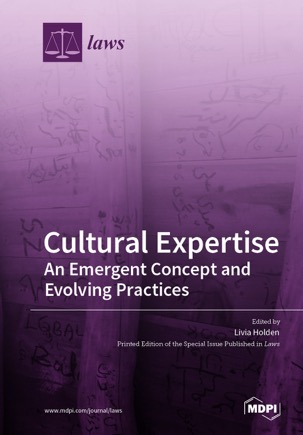
A new publication online “Forum: Cultural Expertise”, edited by Prof. Livia Holden for the Law and History Review Cambridge

We announce the publication online of the “Forum: Cultural Expertise”, that Prof. Livia Holden has edited for the Law and History Review Cambridge, vol. 38, Feb. 2020.

The forum is an outcome of the workshop titled Cultural Expertise in Ancient and Modern History, convened by EURO-EXPERT, in Oxford in July 2018. It aims to make explicit the interdisciplinary components of Cultural Expertise from a historiographical perspective in order to open up the discussion to the history of law.

Please find a list of contents as below:

Livia Holden, Introduction: Why a History of Cultural Expertise?

Livia Holden, Cultural Expertise and Law: An Historical Overview

James Jaffe, The Indian Panchayat, Access to Knowledge and Criminal Prosecutions in Colonial Bombay, 1827–61

Soudabeh Marin, Cultural Expertise in Iran: From the Pahlavi Dynasty to Contemporary Diasporas

Jérôme Bourgon, Historians at the Court: How Cultural Expertise in Qing Law Contributes to the Invention of Hong Kong “Chinese Customary Law”

Stanisław Burdziej, Judging the Communist Past: Historians and Cultural Expertise in Polish Administrative Courts

Lawrence Rosen, Expert Testimony in the Social Sciences: A Historical Overview of Contemporary Issues

Hermine Wiersinga, judge in the criminal court of appeal at the Hague, shares with EURO-EXPERT her paper

Here there is an extract of the paper H.C. (Hermine) Wiersinga, The Judge and the Anthropologist: common ground?, Cultural expertise in Dutch courts, October 2019, with some reflections about judges and anthropologists working partly in the same field.

Please read it and share your thoughts!

“Judges are (trying to) focus on the concrete specific acts of individuals and concrete proof, but they have to use certain ‘frames’ – common knowledge, ‘narratives’ – to reach their judgments. Here is the common ground. Anthropologists are trying to find out what are the stories, told within a group: the narratives that are binding or dividing people and shared within a culture. Abstractions – ‘group knowledge’ ‘collective memories’, shared cultural perceptions and assumptions become visible, come to life, through sharing, by stories people tell each other, in scenarios of the drama involved in society, basically within ‘narratives’ (Comp. Jeanne Gaakeer, Judging from Experience. Law. Praxis, Humanities, Edinburgh university press 2019).  These may be big narratives (religious, f.i.), or small ones (f.e. about remorse and regrets). When we put it like this, a judge has really something in common with an anthropologist. Admittedly: he is not doing it the way an anthropologist is thinking about narratives. His way of using it is almost subconscious. He is categorizing people in those ‘micro-narratives’ hardly knowing how or why.”
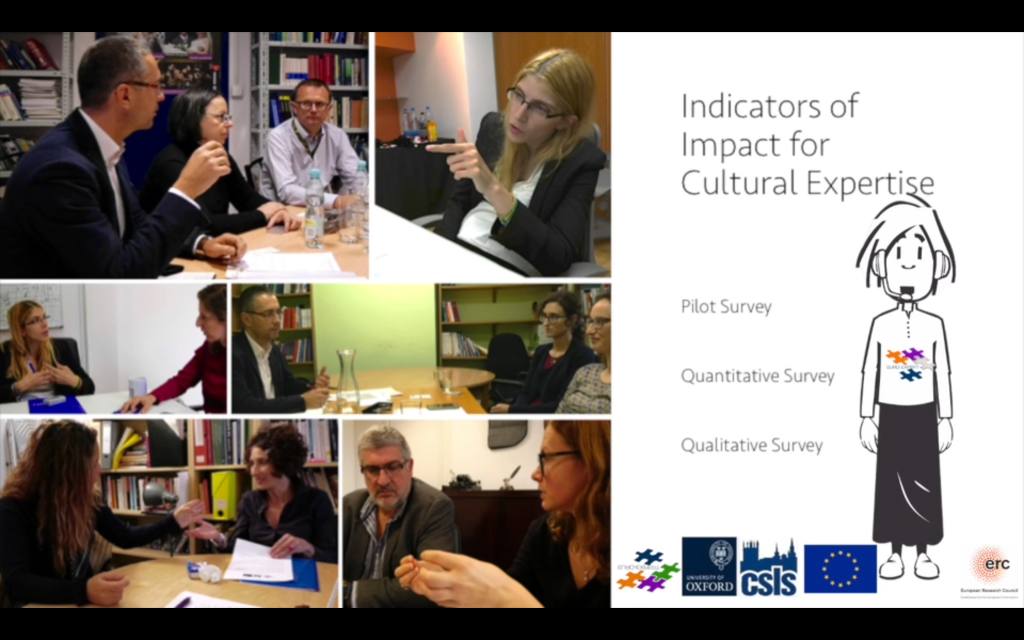
RRI aspects of EURO-EXPERT will be highligted and discussed in Vienna

EURO-EXPERT delegates Maria Giuliana Civinini, judge and President of the Court of Pisa, Carlos Gómez, judge in the High Court of Justice of the Balearic Islands, Håkan Andersson, Public Prosecutor at the Swedish Prosecution Authority, Livia Holden and Sabrina Ciolfi will attend the NewHoRRIzon Social Lab 1 – Workshop 3 at the Institute of Advanced Studies in Vienna, 23-24 January 2010. RRI aspects of EURO-EXPERT will be highligted and discussed with other participants!